
Planning a wedding involves many details, from choosing the right venue and finalising vendors to managing schedules and making sure everything happens as planned. Both wedding planners and wedding coordinators help create a memorable celebration, but their duties, level of involvement, and services are quite different.
A wedding planner usually works with couples from the beginning of the planning process until the wedding celebrations are over. They help set budgets, suggest suitable venues, manage vendors, plan themes, and handle different wedding arrangements to turn the couple’s ideas into reality.
On the other hand, a wedding coordinator mainly focuses on putting the existing plans into action. They manage the wedding-day schedule, stay in touch with vendors, keep track of event timings, and handle last-minute problems to make sure the celebrations run smoothly. Some coordinators also offer support during the weeks before the wedding.
In this article, we will talk about Wedding Planner vs Wedding Coordinator. Understanding the difference between a wedding planner and a wedding coordinator helps couples make the right choice based on their budget, preferences, and needs, making their wedding more organised, enjoyable, and less stressful.
Wedding Planner vs Wedding Coordinator – Key Differences
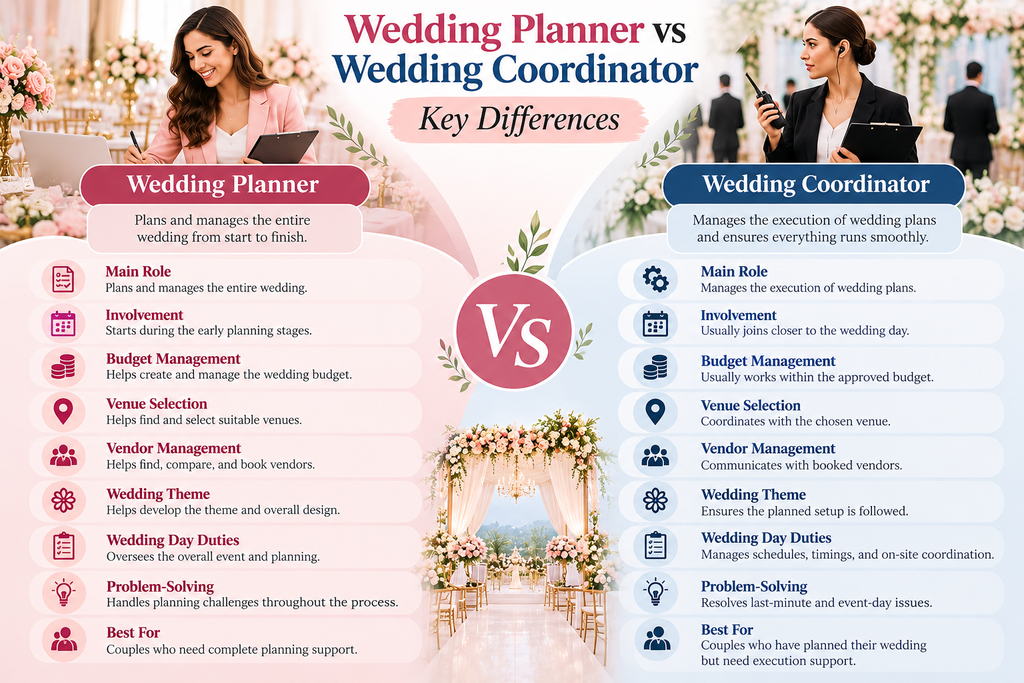
Understanding the difference between a wedding planner and a wedding coordinator helps couples decide which professional best suits their needs. While both work to make weddings successful, their responsibilities, planning timelines, and levels of involvement vary.
| Comparison Factor | Wedding Planner | Wedding Coordinator |
| Main Role | Plans and manages the entire wedding | Manages the execution of wedding plans |
| Involvement | Starts during the early planning stages | Usually joins closer to the wedding day |
| Budget Management | Helps create and manage the wedding budget | Usually works within the approved budget |
| Venue Selection | Helps find and select suitable venues | Coordinates with the chosen venue |
| Vendor Management | Helps find, compare, and book vendors | Communicates with booked vendors |
| Wedding Theme | Helps develop the theme and overall design | Ensures the planned setup is followed |
| Wedding Day Duties | Oversees the overall event and planning | Manages schedules, timings, and on-site coordination |
| Problem-Solving | Handles planning challenges throughout the process | Resolves last-minute and event-day issues |
| Best For | Couples who need complete planning support | Couples who have planned their wedding but need execution support |
Key Responsibilities of a Wedding Planner
A wedding planner manages the wedding planning process from the initial stages to the final celebrations. Their key responsibilities include:
Budget Planning – Preparing a wedding budget and helping allocate funds for different arrangements.
Venue Selection – Finding suitable wedding venues based on the couple’s preferences, guest count, and budget.
Vendor Booking – Researching, comparing, and booking caterers, photographers, decorators, makeup artists, and other service providers.
Theme and Décor Planning – Developing the wedding theme, colour scheme, decorations, and overall event design.
Schedule Management – Preparing a timeline for wedding preparations, ceremonies, and other events.
Overall Planning – Managing wedding arrangements, tracking progress, and resolving planning-related issues.
Key Responsibilities of a Wedding Coordinator
A wedding coordinator focuses on managing the arrangements and ensuring everything runs according to the plan. Their key responsibilities include:
Wedding-Day Scheduling – Managing the event timeline and ensuring ceremonies start and finish as planned.
Vendor Communication – Contacting booked vendors, confirming arrival times, and explaining their responsibilities.
Venue Setup Inspection – Checking decorations, seating arrangements, catering setups, and other event preparations.
Event Coordination – Coordinating with venue staff, family members, and service providers throughout the celebrations.
Last-Minute Problem-Solving – Handling unexpected delays, vendor issues, and other problems during the event.
Schedule Supervision – Monitoring each activity and making sure the wedding follows the agreed plan.
When Should You Hire a Wedding Planner?
Hiring a wedding planner is a good choice when you need professional help managing most or all aspects of your wedding. Wedding preparations involve many tasks, including researching venues, comparing vendors, managing budgets, and following up on bookings. A wedding planner takes care of these responsibilities and helps you make decisions according to your preferences.
You should consider hiring a wedding planner if you have a busy work schedule, are planning a large wedding, or want to organise a destination wedding in another city or country. They can also help manage multiple ceremonies, such as the mehendi, haldi, sangeet, wedding ceremony, and reception.
A wedding planner is also helpful when you have a particular wedding theme in mind but are unsure how to bring it to life. They can suggest suitable decorations, recommend reliable vendors, and help create an event that matches your expectations. Hiring a planner early gives you more time to explore venues, compare services, and organise your wedding without rushing through important decisions.
Read Complete Guide on – How to Choose a Wedding Planner in India
When Should You Hire a Wedding Coordinator?
A wedding coordinator is the right choice when you have already completed most of your wedding preparations but need someone to manage the arrangements on the wedding day. If you have booked the venue, selected vendors, finalised decorations, and planned the schedule, a coordinator can make sure everything happens as expected.
For example, you may have personally booked your caterer, photographer, florist, and entertainment team. However, managing all these professionals during the wedding can be difficult, especially when several ceremonies take place on the same day. A wedding coordinator communicates with vendors, checks the arrangements, and ensures that everyone follows the agreed schedule.
Hiring a coordinator also allows your family members to enjoy the celebrations instead of constantly checking arrangements or solving problems. Before booking their services, ask whether they provide support only on the wedding day or also offer pre-wedding meetings and vendor confirmations. This will help you understand what services are included and choose a package that suits your requirements.
Factors to Consider Before Hiring a Wedding Professional
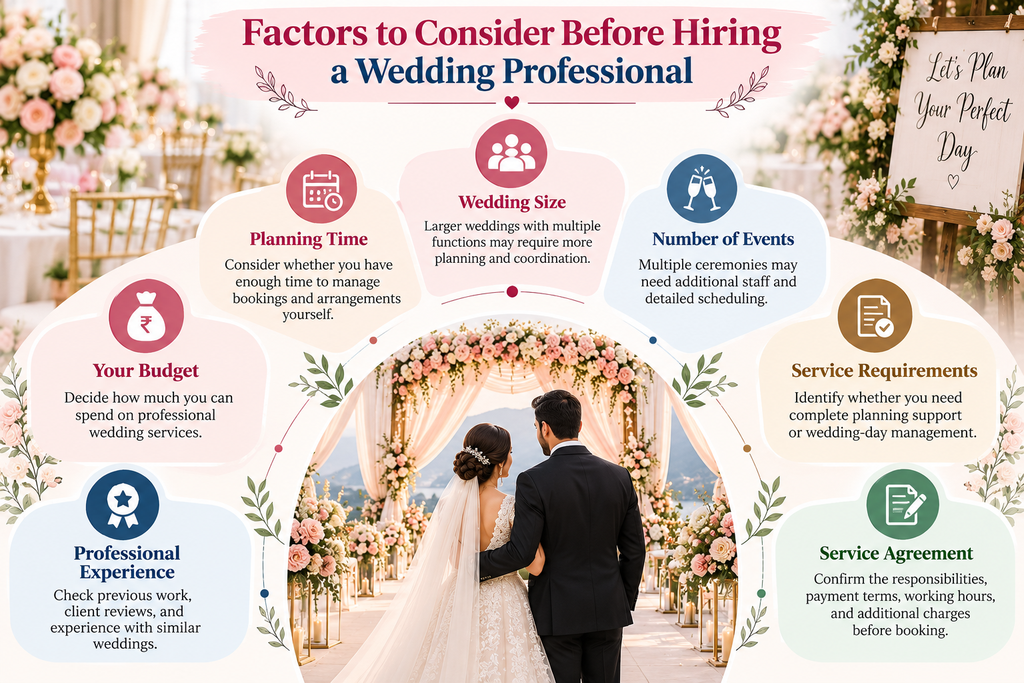
Before choosing between a wedding planner and a wedding coordinator, consider these important factors:
Your Budget – Decide how much you can spend on professional wedding services.
Planning Time – Consider whether you have enough time to manage bookings and arrangements yourself.
Wedding Size – Larger weddings with multiple functions may require more planning and coordination.
Number of Events – Multiple ceremonies may need additional staff and detailed scheduling.
Service Requirements –Identify whether you need complete planning support or wedding-day management.
Professional Experience – Check previous work, client reviews, and experience with similar weddings.
Service Agreement – Confirm the responsibilities, payment terms, working hours, and additional charges before booking.
Common Mistakes to Avoid When Choosing a Wedding Planner or Coordinator
Making the right choice becomes easier when you avoid these common mistakes:
Ignoring Service Details – Always understand which services are included in the package.
Choosing Only by Price – Compare experience, service quality, and responsibilities instead of focusing only on cost.
Booking Too Late – Contact professionals early to improve your chances of finding someone suitable.
Not Discussing Expectations – Clearly explain your preferences, schedule, and priorities before signing an agreement.
Overlooking Backup Plans – Ask how the professional handles vendor cancellations, weather changes, and unexpected delays.
Confusing Their Roles – Remember that a wedding planner generally manages the planning process, while a wedding coordinator focuses on executing the arrangements.
Final Words
Choosing between a wedding planner and a wedding coordinator depends on your budget, preferences, and the level of support you need. A wedding planner is ideal if you want professional assistance with everything from venue selection and vendor bookings to decorations and overall wedding arrangements. On the other hand, a wedding coordinator is a great choice if you have already planned your wedding and need someone to manage the details on the big day.
Before making your decision, consider your schedule, wedding size, number of ceremonies, and the responsibilities you want to manage yourself. Compare service packages, check previous work, and discuss your expectations clearly before hiring a professional.
Ultimately, both wedding planners and wedding coordinators help make wedding celebrations more organised and enjoyable. By understanding the difference between a wedding planner and a wedding coordinator, you can choose the right support, reduce last-minute stress, and focus on creating beautiful memories with your loved ones.


